

What’s New at WDC
News, success stories, and important updates from across our programs, partners, and communities.
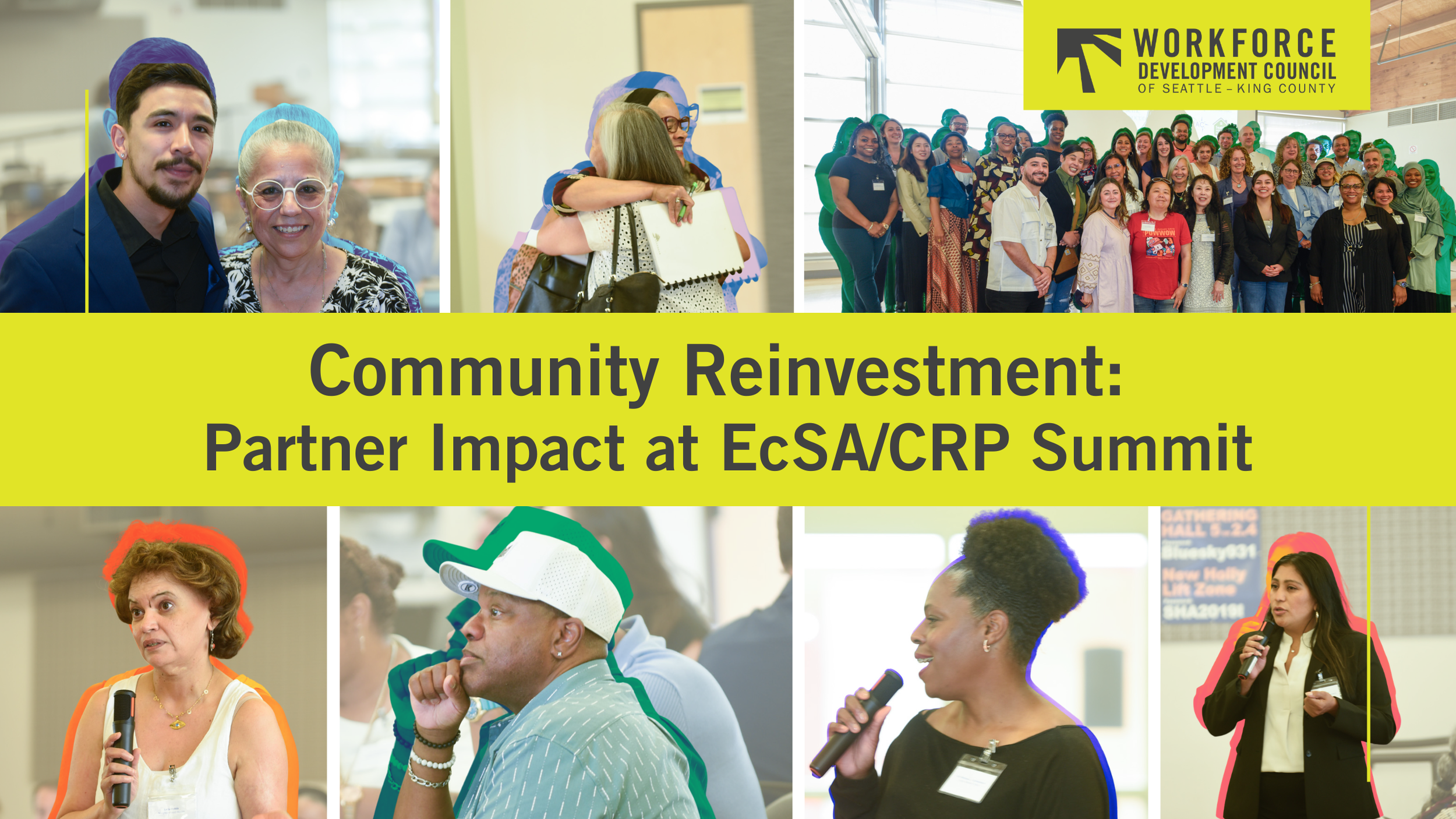
Community Reinvestment: Partners Share Their Impact at EcSA/CRP Summit
the Workforce Development Council of Seattle-King County hosted the Economic Security for All & Community Reinvestment Program Provider Summit. It was a morning that brought together the Washington State Department of Commerce, Employment Security Department, and dozens of community partners from across King County to do something we don't do often enough: pause and celebrate.
This Summit gave space to those who make community work happen — the intermediaries, training providers, small business owners, and community organizations — to share their lived experiences and those of the people they serve.
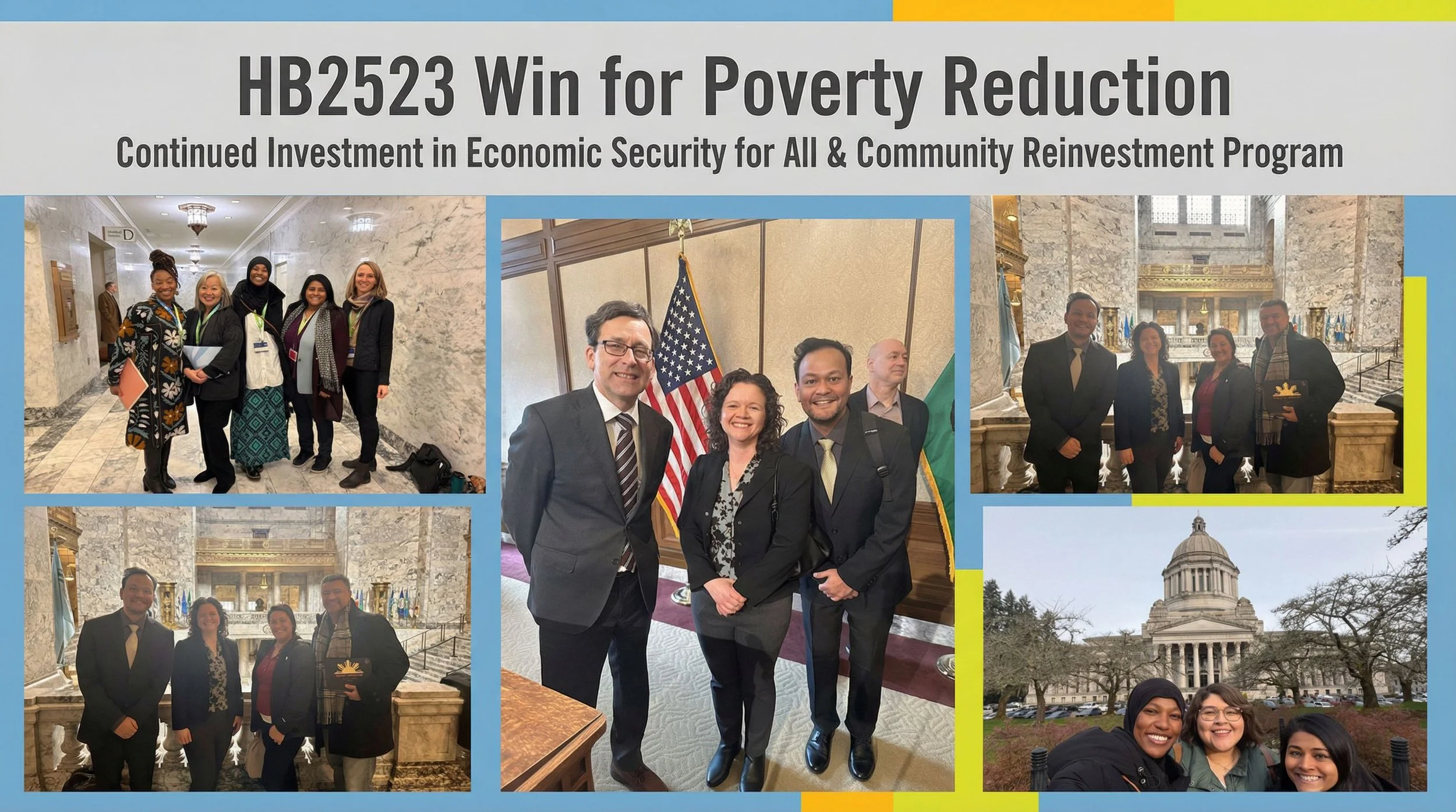
WDC Celebrates Passage of HB 2523 and Continued Investment in Economic Security for All
The Workforce Development Council of Seattle-King County is celebrating an important win for communities across Washington: the passage and signing of House Bill 2523, which strengthens the Community Reinvestment Program and reinforces the state’s commitment to expanding economic opportunity. This milestone reflects years of advocacy, partnership, and community leadership. Alongside the Washington Workforce Association, local workforce boards, community-based organizations, and legislative champions, the WDC has worked to help ensure that Economic Security for All (EcSA) and the Community Reinvestment Program (CRP) remain strong tools for reducing poverty, advancing equity, and connecting people to stable careers.
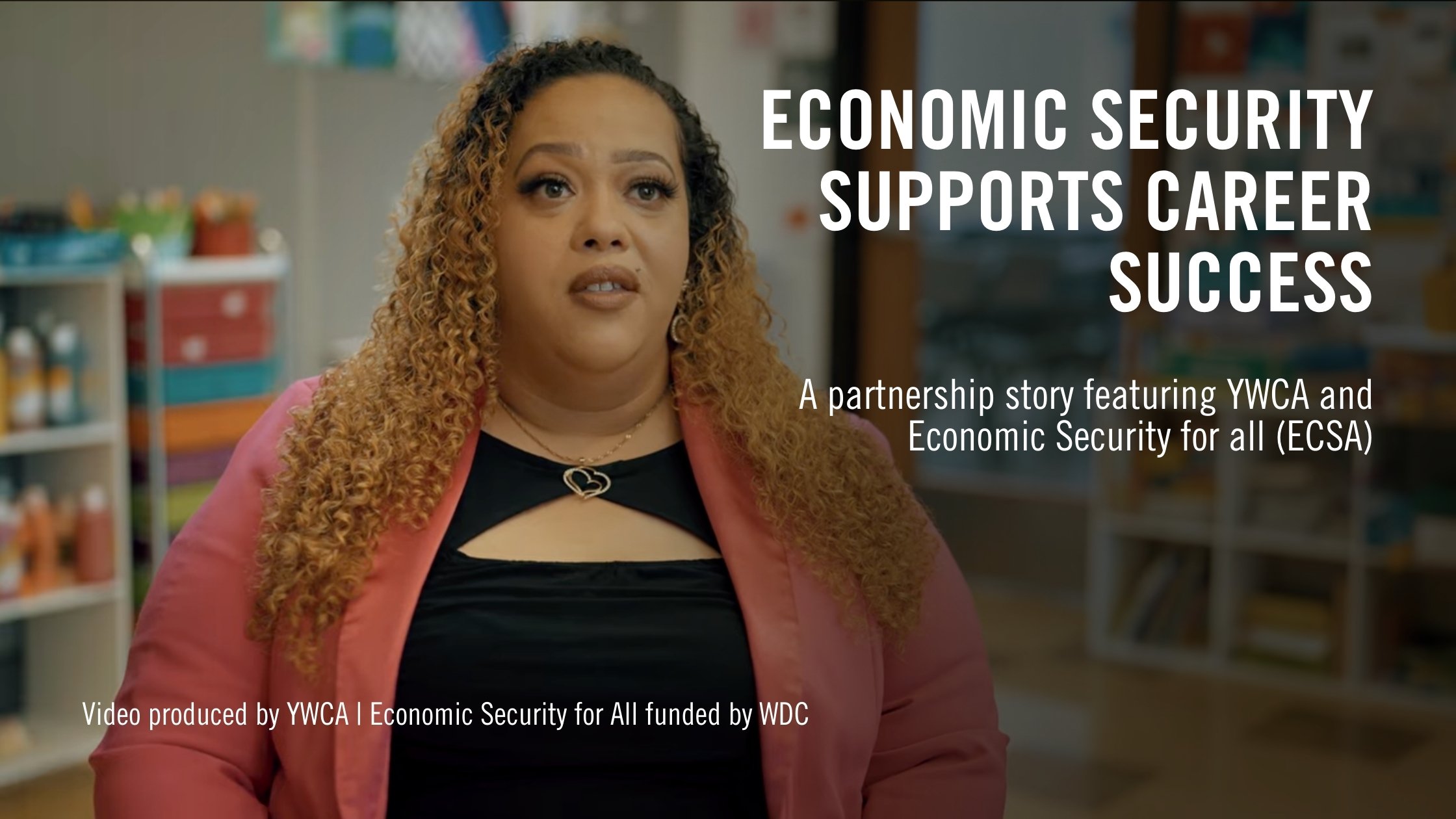
Economic Security for All Supports Career Success
When people are facing instability — whether related to housing, income, or family safety — completing workforce training and transitioning into employment can feel out of reach. That’s why coordinated investments that address both economic security and career pathways are critical to workforce success. This video, produced by YWCA, highlights Candice’s journey from housing instability to a career in banking. During a period of crisis, Candice was connected to YWCA’s domestic violence and housing programs, which provided immediate safety and stability. That foundation allowed her to focus on the next step: building a sustainable career.

GBI + Career Support: One Year of Impact
In March 2024, the Workforce Development Council of Seattle-King County (WDC) released results from a groundbreaking Guaranteed Basic Income (GBI) pilot that paired flexible monthly stipends with personalized workforce support to advance economic mobility. The outcomes were striking: employment rose from 37% to 66%, savings among families with children increased from 0% to 42%, and participants reported lower financial stress, improved health, and stronger progress toward education and career goals. One year later, the work hasn’t stopped—it’s scaling. But a need for continued investment means the future is uncertain.

Fighting Poverty, One Paycheck at a Time: How EcSA is Changing Lives in King County
King County is a hub of innovation and economic opportunity, yet many of our neighbors face significant challenges in achieving financial stability. In fact, 27% of Washington's struggling households are located here. With rising costs of living and systemic barriers to employment, traditional solutions alone aren’t enough. That’s why the Workforce Development Council of Seattle-King County (WDC) proudly supports the Economic Security for All (EcSA) program—a transformative initiative helping individuals move from poverty to self-sufficiency.

New Study Reveals Impact of $500 to Fight Poverty in King County
A $500 monthly boost led to significant employment growth, enhanced savings, improved debt management, and better quality of life for diverse King County residents facing poverty. The Guaranteed Basic Income (GBI) Pilot, designed by the Workforce Development Council of Seattle-King County (WDC) and independently evaluated by Applied Inference, showed promising outcomes over its 10-month course.

How Local Resources Helped Afzal Build a New Life After Fleeing Afghanistan
In this video, meet Afzal, a refugee from Afghanistan who arrived in King County in 2021, after being evacuated from Kabul as the country fell to the Taliban. After connecting with Neighborhood House and enrolling in services blended from local (VSHSL), state (EcSA) , and federal (WIOA) resources he was able to find a job, receive training, and cover basic costs like rent and transportation. Afzal's story showcases the potential of community-based programs and the impact they can have in helping refugees and other vulnerable populations find stable employment and build a new life.