

Where Trust Meets Investment: Community-Led Grants Launch in King County
We are proud to share that the Seattle Latino Metropolitan Chamber of Commerce (SLMCC) and Tabor 100 have been selected as our intermediary partners to help distribute more than $400,000 in grants and resources to small businesses across King County.
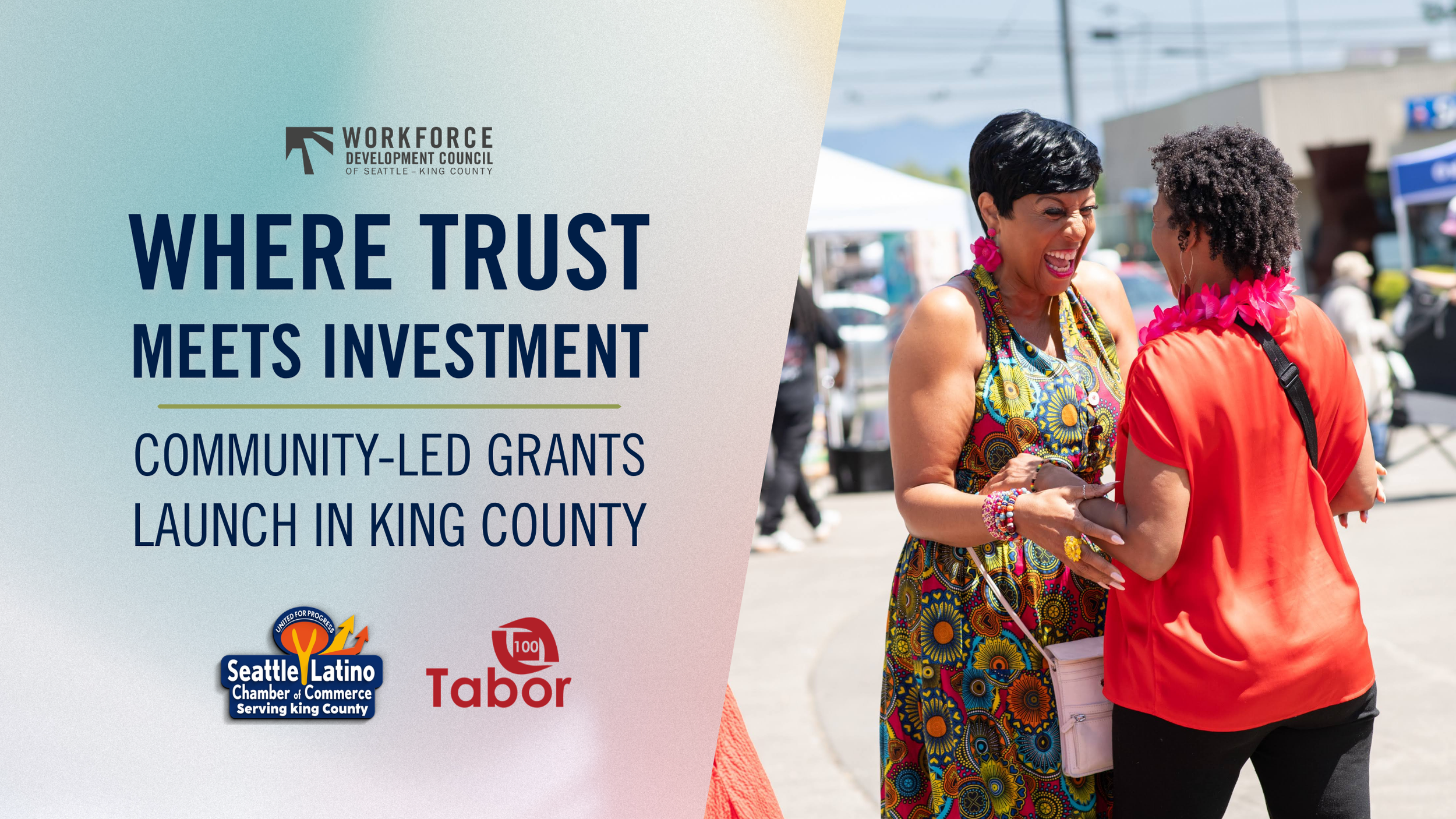
This investment is part of the Workforce Development Council of Seattle-King County (WDC)’s Industry Strategies, which drives economic growth by offering employers strategies, resources, and solutions to meet today’s workforce challenges.
“We know workforce solutions are strongest when they’re shaped by the communities that power our region’s economy,” said Marie Kurose, CEO of the WDC. “That’s why partnering with Tabor 100 and the Seattle Latino Metropolitan Chamber of Commerce matters so much. They bring the trust, the relationships, and the lived experiences to get resources into the hands of entrepreneurs and small business leaders who are ready to grow. This partnership is about shifting power, expanding access to capital, and backing the businesses that are driving our region forward.”
Why This Matters
These business grants, shaped by the Washington State Department of Commerce’s Community Reinvestment Program (CRP), are designed to increase equity in economic opportunity by supporting businesses owned by individuals from historically underserved communities, particularly Black, Native American, Latine, Asian, Native Hawaiian, and Pacific Islander communities.
The request for proposals centered on By and For organizations: those rooted in the communities they serve and grounded in cultural competency, trust, and lived experience in economic development.
We were encouraged by the strong response to this opportunity. The proposals reflected deep commitment, trusted community relationships, and thoughtful plans to support small businesses across King County. The competitive selection process made clear both the significant need for this type of investment and the readiness of community-based organizations to expand their support of entrepreneurs.
Seattle Latino Chamber of Commerce and Tabor 100 rose to the top based on the strength of their community connections, the trust they have built over time, and their clear, practical approach to implementing this work. They are well positioned to deliver these grants in ways that are accessible, culturally grounded, and aligned with the needs of the businesses they serve, alongside the strong programming they already provide.
Together, these partnerships will help ensure that funding reaches entrepreneurs who too often face barriers to capital, technical assistance, and growth opportunities, and that support is delivered by organizations that understand their communities firsthand.
Meet the Selected Partners
Seattle Latino Metropolitan Chamber of Commerce
The Seattle Latino Metropolitan Chamber of Commerce (SLMCC) works to grow its members’ businesses and help Latino owners and independent professionals unite to advance their organizations to new levels of prosperity.
With deep roots in the Latino business community, the Chamber brings a strong track record of advocacy, relationship-building, and economic empowerment for Latino entrepreneurs across King County.
“The Seattle Latino Metropolitan Chamber of Commerce is honored to be selected by the Workforce Development Council of Seattle-King County to support the county workforce initiative. We are deeply committed to advancing equitable access to workforce opportunities for Latino and immigrant workers and small businesses. Through bilingual, community-rooted engagement, SLMCC looks forward to helping bridge gaps in access, strengthen workforce pathways, and contribute to a more inclusive and resilient regional economy.”
Tabor 100
Tabor 100 is an association of entrepreneurs and business advocates committed to economic power, educational excellence, and social equity for African Americans and the community at large.
For decades, Tabor 100 has been a driving force behind Black business development and wealth-building in the region, providing networking, mentorship, and access to opportunity for African American entrepreneurs.
“Tabor 100 is proud to partner with the Workforce Development Council of Seattle–King County in advancing the county’s workforce development efforts. We are committed to expanding equitable access to workforce and economic opportunities for historically underserved communities and small businesses. Through culturally responsive engagement and strong community connections, Tabor 100 looks forward to supporting workforce pathways, reducing barriers to participation, and contributing to a stronger, more inclusive regional economy.”
What Happens Next
Both partners have begun offering their own grant opportunities to eligible small businesses and entrepreneurs in King County. Applications are now open, and due no later than Monday, April 6 2026, 5:00PM Pacific.
These grants are designed to support businesses at different stages, whether launching, stabilizing, or growing, and to strengthen workforce participation, job quality, and long-term economic stability. Find out more eligibility by visiting the application links on SLMCC and Tabor 100 websites.
A Community Investment
This announcement represents a shared commitment to building an inclusive economy where entrepreneurs of color and historically underserved backgrounds have the capital, support, and opportunity to thrive.
When small businesses succeed, communities gain jobs, stability, and generational wealth. And when resources flow through trusted community organizations, that impact multiplies.
Are You a Small Business Owner or Entrepreneur?
If you are a business owner in King County, particularly from historically underserved communities, we encourage you to apply for these grants with the Seattle Latino Chamber of Commerce or Tabor 100.
Help Us Spread the Word
Community investment works best when it reaches the people it’s meant to serve. Share this announcement with entrepreneurs, business owners, and community leaders who should know about this opportunity.
Together, we’re building an economy that works from community, for community.